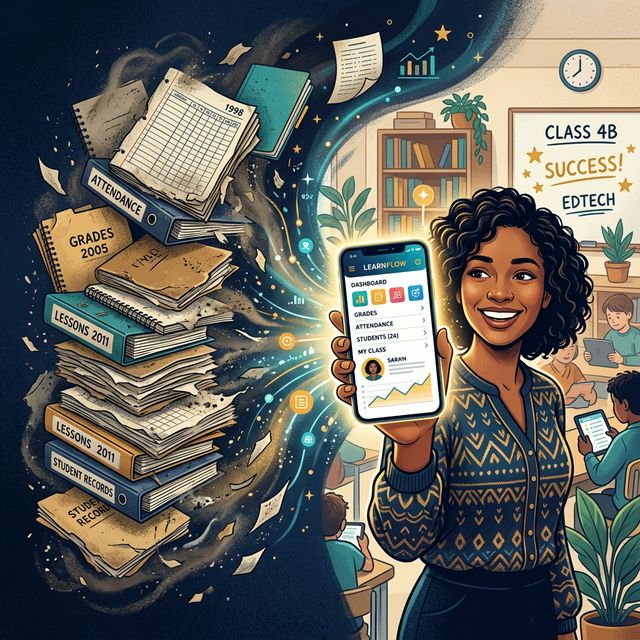
My co-founder Nishit and I used to joke that most school software looks like it was designed in 2004 for accountants, not teachers. Then we realized it wasn't a joke. It was sad reality.
If you walk into a typical school administrative office in India, you will see complex ERP systems running on desktop computers with 200 dropdown menus. These traditional systems are feature-dense, incredibly bloated, and universally hated by the teachers who actually have to use them.
When we started building Anubodha Edtech, our explicit goal was not to add more buttons. Our goal to rethink the philosophy of school software from the ground up.
1. We Built for Teachers First
The Traditional Way: Traditional ERPs treat teacher workflows as an afterthought. Their interfaces resemble complex spreadsheets because they were built for data-entry clerks, forcing teachers to adapt to confusing navigation.
The Anubodha Way: We designed the mobile Teacher Portal first. Marking attendance takes 30 seconds. Entering grades flows naturally. By obsessing over UI simplicity and stripping away the clutter, our teachers actually want to use the platform. High adoption equals accurate data for the administration.
2. Proactive AI Intelligence, not Static Charts
The Traditional Way: Legacy ERPs give principals a dashboard of historical bar charts. If you want to know which child is suddenly skipping classes, you have to run a manual query.
The Anubodha Way: Anubodha's AI Hub acts like an invisible assistant. It proactively flags trends—predicting which students might be at risk academically based on subtle attendance drops. Furthermore, during grueling exam seasons, our AI dramatically assists teachers by drafting highly personalized report card remarks based on actual student performance metrics, saving hours of manual labor.
3. Reimagining Parent Communication
The Traditional Way: Force parents to download a bloated app. Watch them forget the password. See them disable push notifications because it spams them with generic alerts.
The Anubodha Way: We use the channels parents already heavily rely on: WhatsApp and SMS. Crucial reminders about fees or unexcused absences go straight to a parent's WhatsApp screen in Hindi, Gujarati, or English. It is frictionless, respectful, and highly effective.
4. The Offline-First Reality
The Traditional Way: Hosted locally requiring expensive IT maintenance, or cloud-based platforms that shatter into error screens the moment the school WiFi drops.
The Anubodha Way: Critical apps designed for our teachers feature an Offline-First architecture. If the network goes out mid-class, the teacher keeps marking attendance. The data syncs securely and transparently in the background later.
The Verdict
Traditional ERPs were wonderful tools for a different era. But as Indian schools navigate the complexities of NEP 2020 and DPDPA privacy laws, schools need more than a heavy digital filing cabinet. They need an intelligent, beautiful, and empathetic operating system.
We built Anubodha for the modern Indian school. Book a demo today and experience what software feels like when it is designed with care.